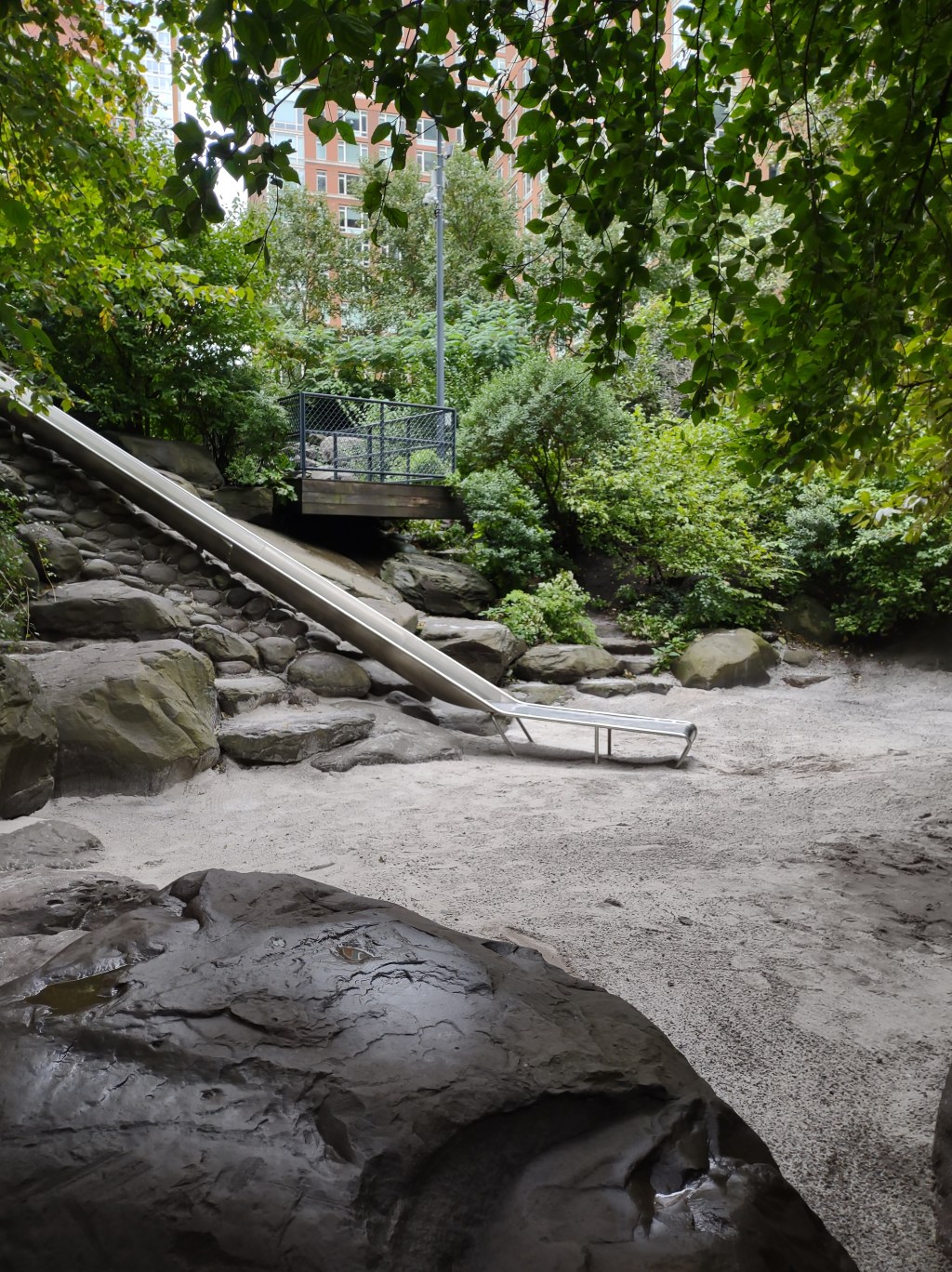
One of, if not the most densely populated Western city is filled with many interesting and unique spaces. As a student and resident of a much newer, and less densely populated Brisbane, how New York City public spaces have evolved over time is of particular interest to me. Brisbane has the opportunity to plan and reserve outdoor spaces for humans and non-humans before they’re snapped up for development and we as a city would do well to learn from spaces like Teardrop Park.
To me, it was the epitome of a design that was functional for humans, but accommodating of natural systems.
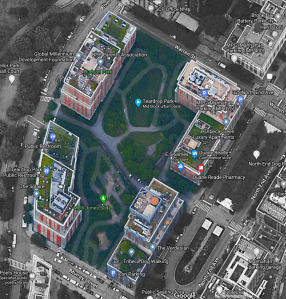
I was initialled quite confused as I entered this space. From and aerial view, it seems quire clear, but the I found the on ground conditions quite the opposite. Compared to the straight, open avenues I had been walking up and down and the formality of The High Line, I was surprised at the sudden enclosure of this space I’d stumbled into. Looking up, the tops of buildings only just extended past the tree canopies and in some instances were completely obscured by them. The paths were anything from linear and roped around level changes layered with dramatic rock displays; more akin to trail design in national parks, where the human pathing yields to the landscape. It certainly didn’t feel designed.
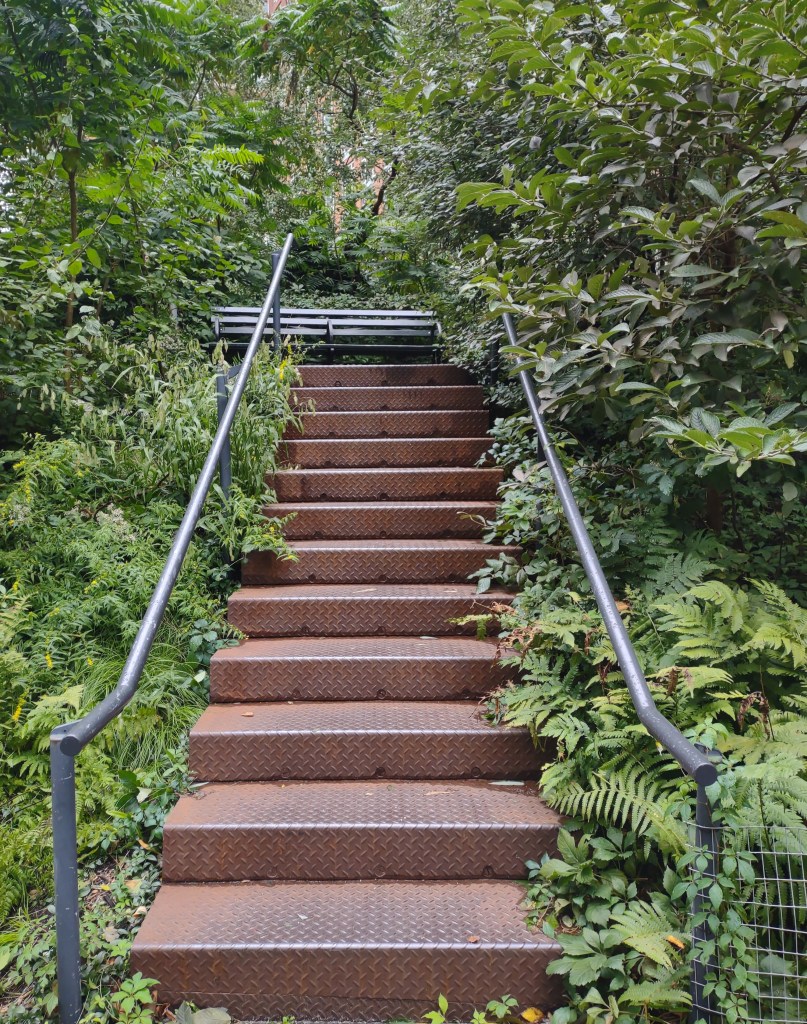
The shrubbery was dense and wild, spilling out where it wanted, blocking open view lines, inviting exploration. This was perhaps my most loved feature, a sense of mystery that I don’t often get from designed landscapes, especially in the urban realm. In Australia we have a set of design principles called CPTED (pronounced SEP-TED) – Crime Prevention Through Environmental Design which provide a comprehensive guide for exactly that: preventing crime. While I applaud many of these principles and encourage their use, I do believe some public areas could benefit from a little more mystery. To me, this park was terrific, but I don’t believe anything remotely similar could be built in Australia. I’m still a student and I don’t know that this is the case, but I’d love to be wrong about it.
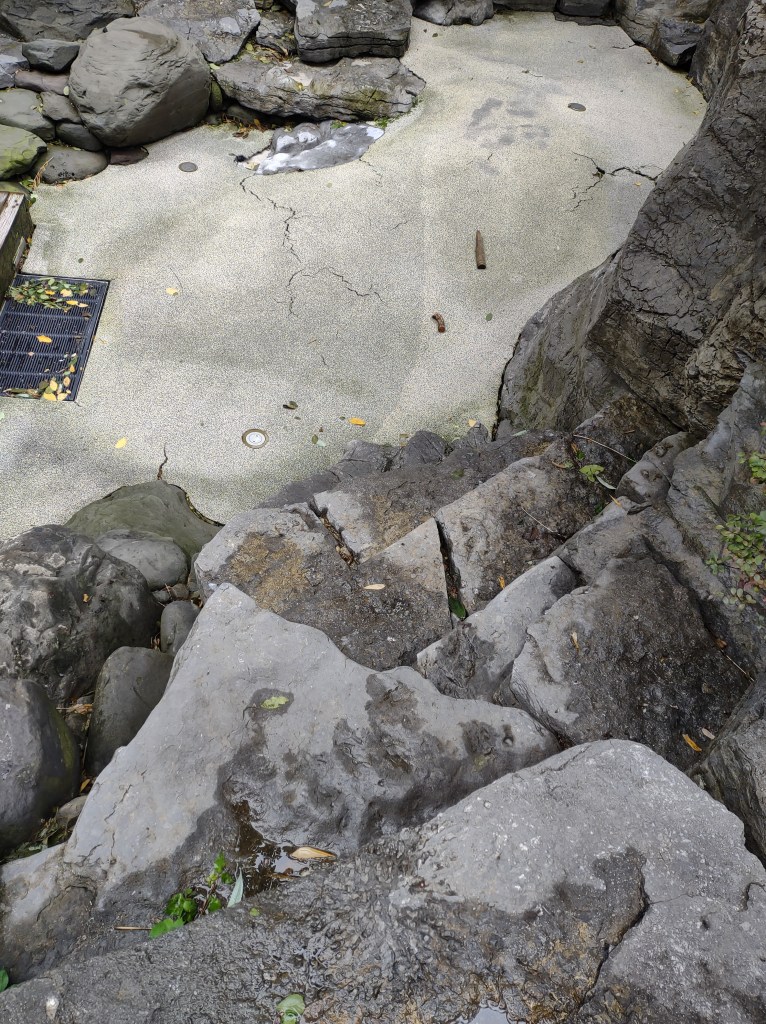
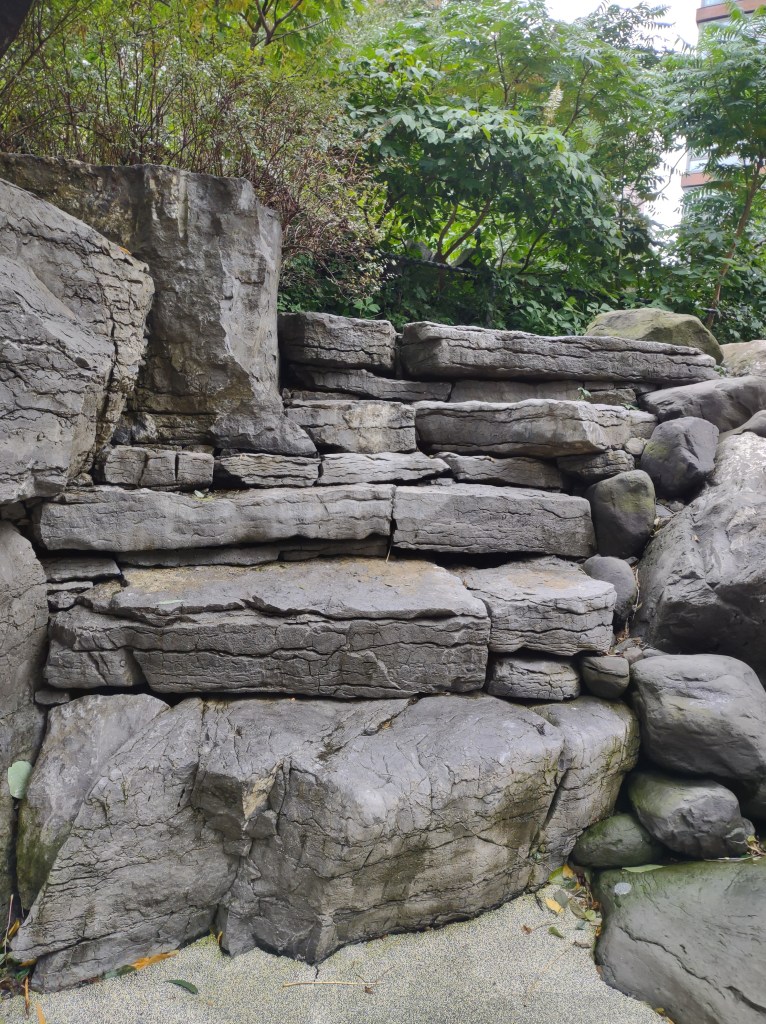
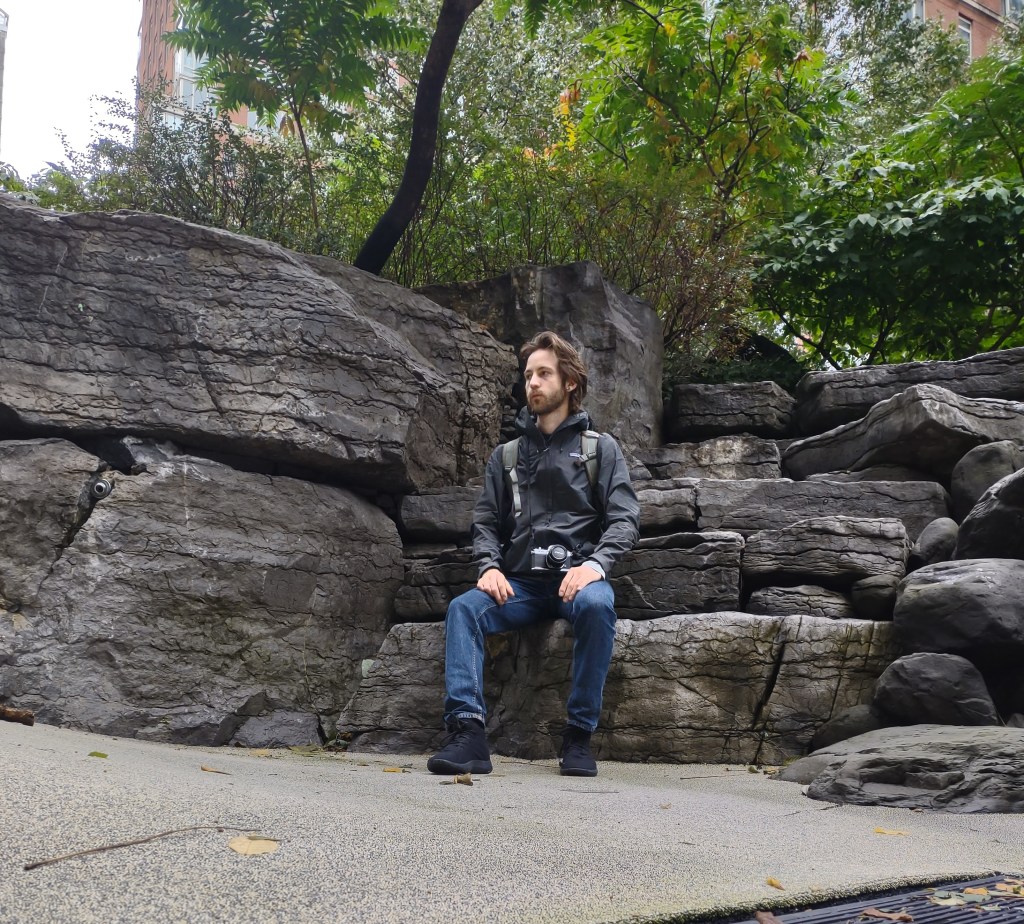
I was quite taken back to come to the top of a stepped cliff in the park leading down to a soft fall matt surrounded with more rocks. So much so that I took pictures *gasp* to document my astonishment. I know that “natural” playscapes are particularly difficult to designate because the potential for injury.
Plenty of designs will opt to purchase fully formed playscapes that already meet Australian Standards rather than risk creating a fully interactive environment that has the potential for injury. Only takes a running child facing turned the other way to plunge 5″11′ (my height) landing either on (not particularly) soft fall or rocks. Maybe I’m overall cautious, maybe it’s been conditioned into me or maybe I was just a stupid child- in any case it’s food for thought.
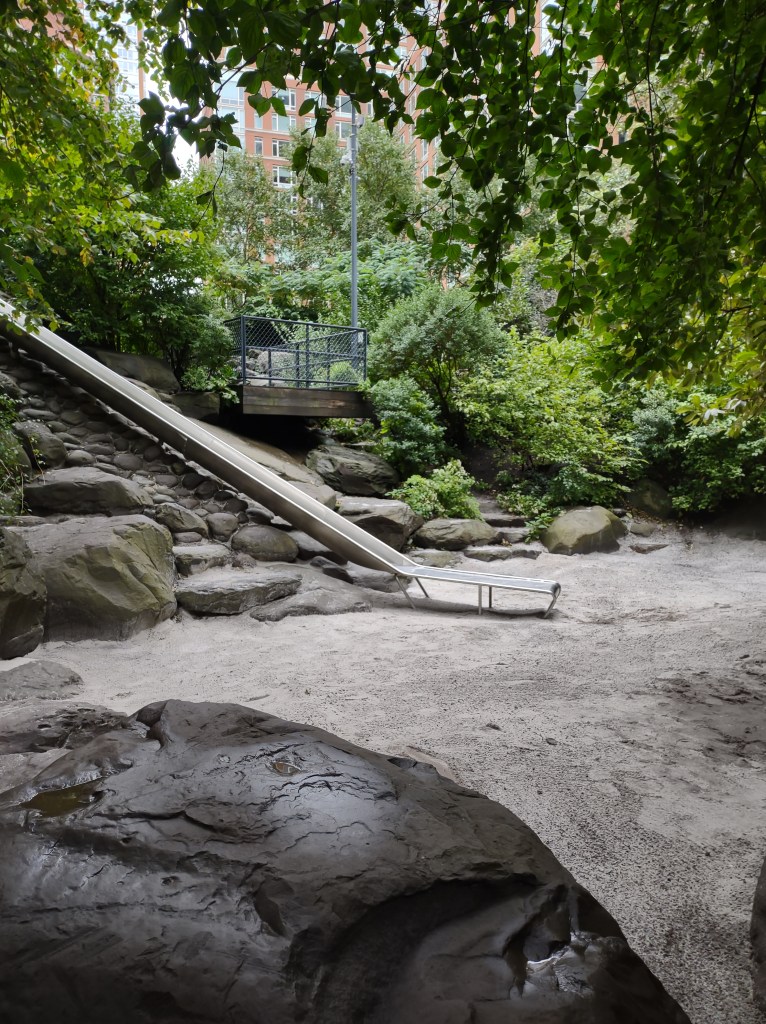
This image captures much of the essence of this unique space in NYC. Where are the edges of the playground? Where are the well defined garden beds? Which rocks have been placed? Usually I’d be able to answer most of these with some certainty, but in this space I can’t. I don’t even think I want to.
THE END
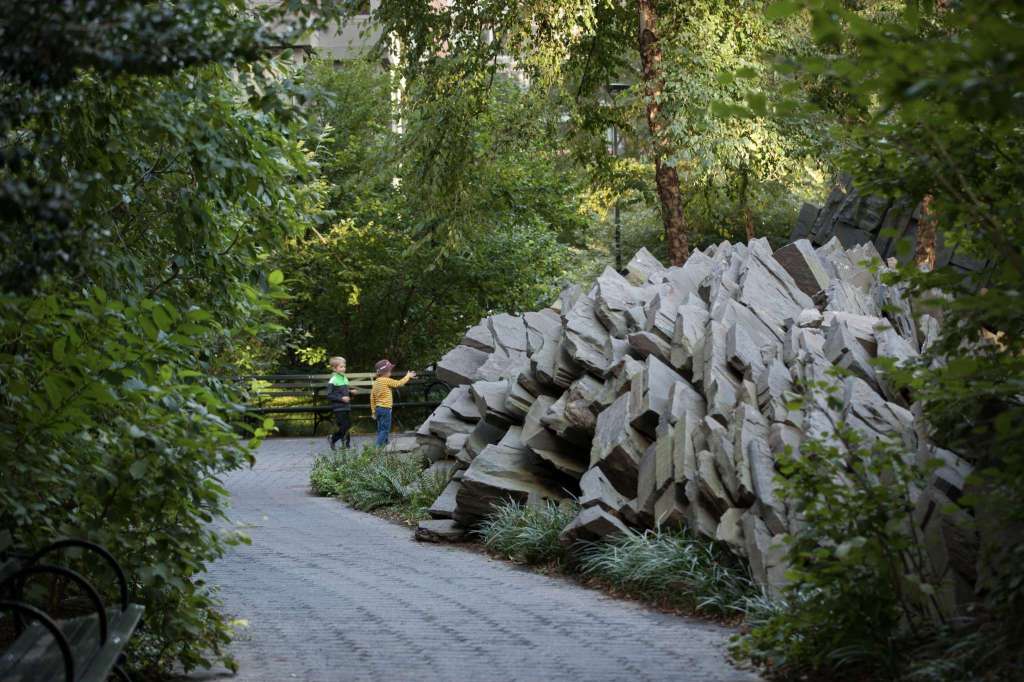
When writing this, I actually looked into the design and had a rather pleasant time reading about it. It is INCREDIBILY well thought out and would highly recommend reading through. Teardrop Park was designed by Michael Van Valkenburgh Associates Inc and completed in 2009.
 Reed
Reed 
Leave a comment