If you can drive, parking a car is relatively straightforward. There are signs, there are lines on the ground and there are universal rules banishing me from mounting the pavement and ploughing into innocent bystanders, a past time that I have struggled to let go. My yet resolved beef with the general population aside, there is a relatively simple order to the way in which one conducts themselves driving an car. Bicycles are free of many of these rules, much to the chagrin of Australian Hilux drivers who regularly feel the compulsion to express their insightful opinions on the lack of a two-wheeled tax wherever there are human ears in their vicinity. The Dutch, and many European nations have successfully dedicated pathways free from would-be murderous motorists. Worldwide this trend is catching on. Indeed in Brisbane, Brisbane City Council (BCC) have made a committed effort to do the same. In 2020, strips of the CBD were handed back to the people and witnessed the beginning of a city accepting of active transport.
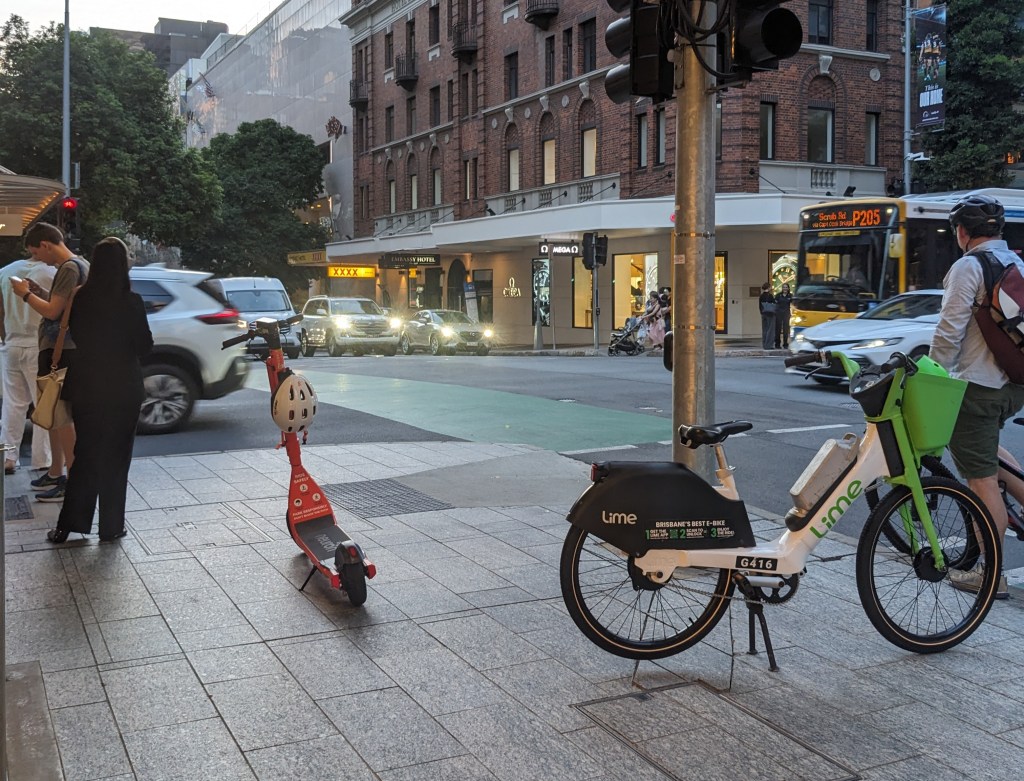
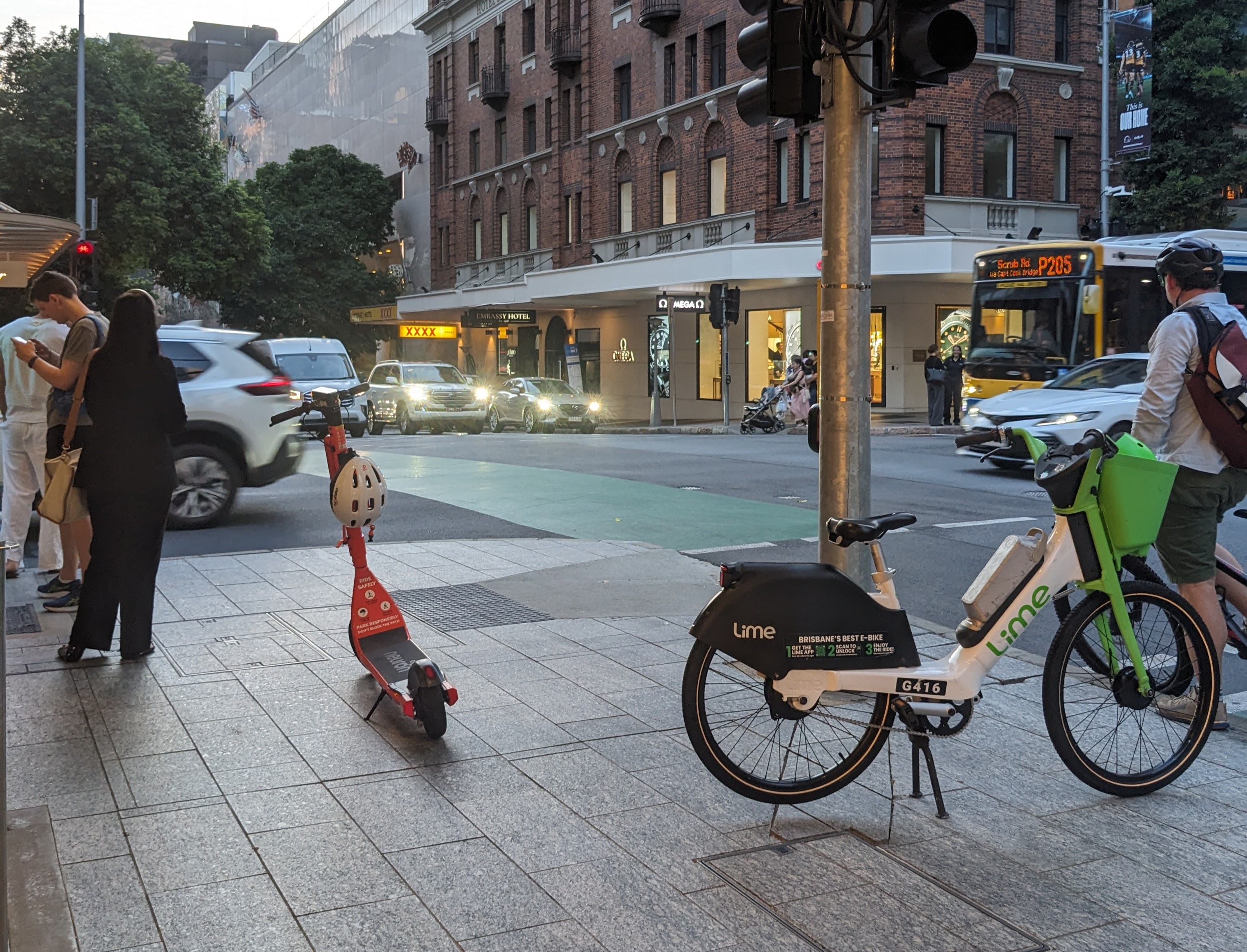
After the spectacular failure of City Cycles, private companies were also given the opportunity to spectacularly fail at providing city traversing machines to the public. In keeping with classic BCC blue and yellow and the famous maroon of Queensland, lime green scooters were the first to be parachuted into the city. We awoke one day to a blanket of white and green, joyously peeping out the windows knowing this would certainly mean a day off school. Mania soon followed and Brisbane streets filled with throngs of personal electric vehicle virgins buffeting roads, pavements, cycleways, grass fields, golf courses, shops, clubs, alleyways and rivers. People loved them. I was living a twenty five minute walk from The Valley and so the prospect of reducing that commute to five minutes and zero walking was very appealing and something I frequently engaged in. For me, their novelty soon wore off as I realised that my commuting was much better suited to bicycle; but they retained usefulness as an alternate form of transport and particularly for tourists visiting the city.
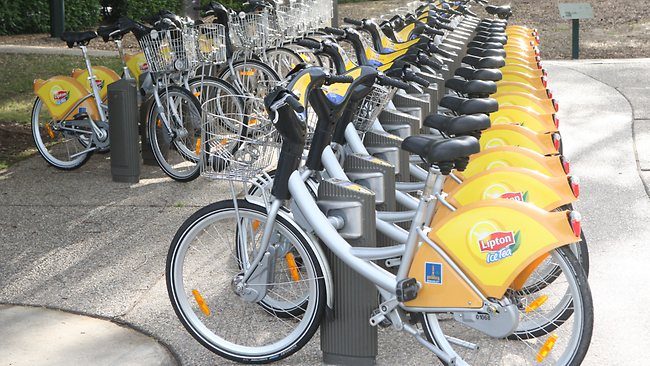
Over the next few years, restrictions were added and policed with a keener eye, as law enforcement swivelled their speed guns to the scooterers and gave helmetless bicycle riders some relief as they ensured scooter helmets were spending more time on heads and less time in the Brisbane River.
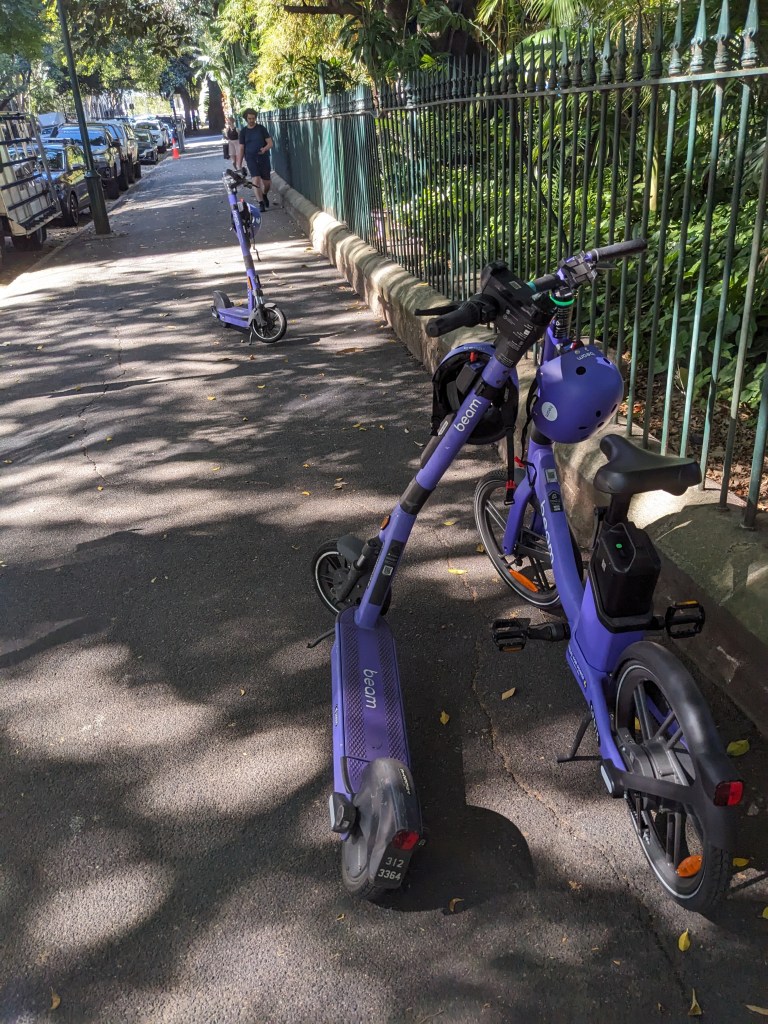
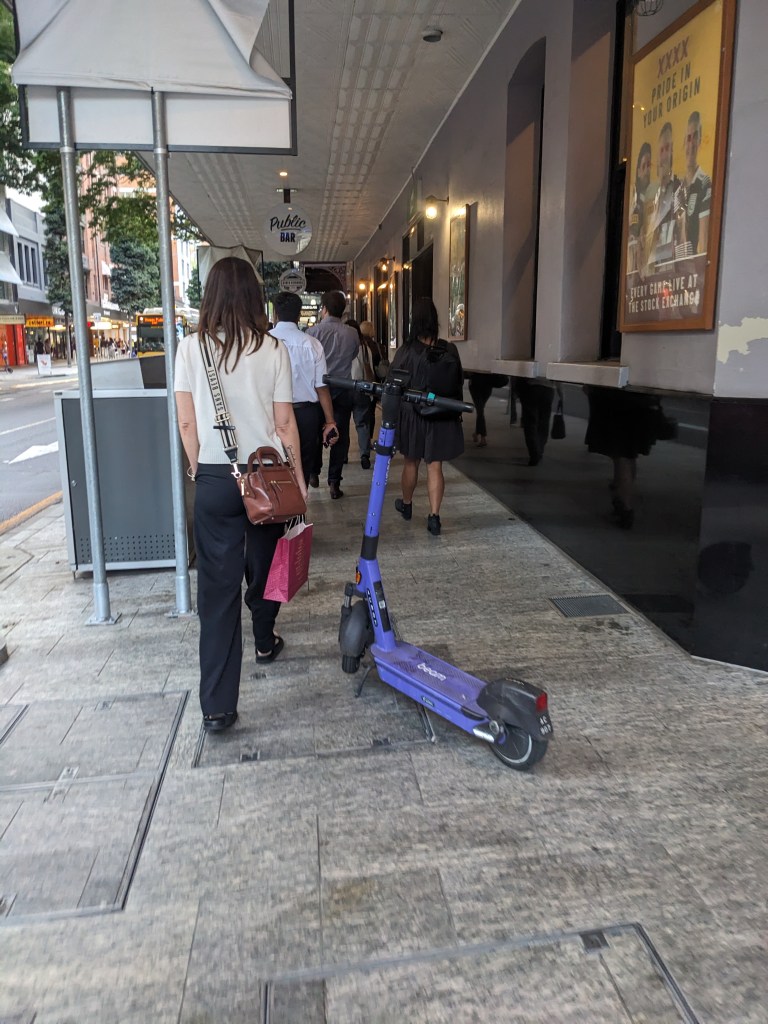
Yet the management or lackthereof has been positvely shite.The placement of the scooters has been anything but strategic, with the private companies dumping their product in the morning wherever they feel necessary, whilst the parking is left entirely up to the user. In most cases, this happens to be horizontally across the “Top Ten Narrowest Footpaths That Are Also Critical Pedestrian Highways”.
Not only are these private companies in blatant breach of the Disability Discrimination Act 1992 (DDA), it’s also absolute hypocrisy from BCC and other government agencies. You are not simply allowed to set up business and flog your wares wherever you like in Brisbane. Hospitality venues must adhere to stringent footpath dining regulations, and market stalls must operate within strict time and location parametres. When I had my own coffee trailer, BCC even determined which bay we had to park in and the orientation of our business.

If we agree that active transport is good, and rentable e-mobilty can be of immense benefit to our city, is there a better way of managing them?
Japan would argue there is.
The Eastern innovation centre of the world has unsurprisingly extended it’s reputation for brilliant thinking to it’s e-scooter rental scheme. In particular, one company seems to have perfected it.
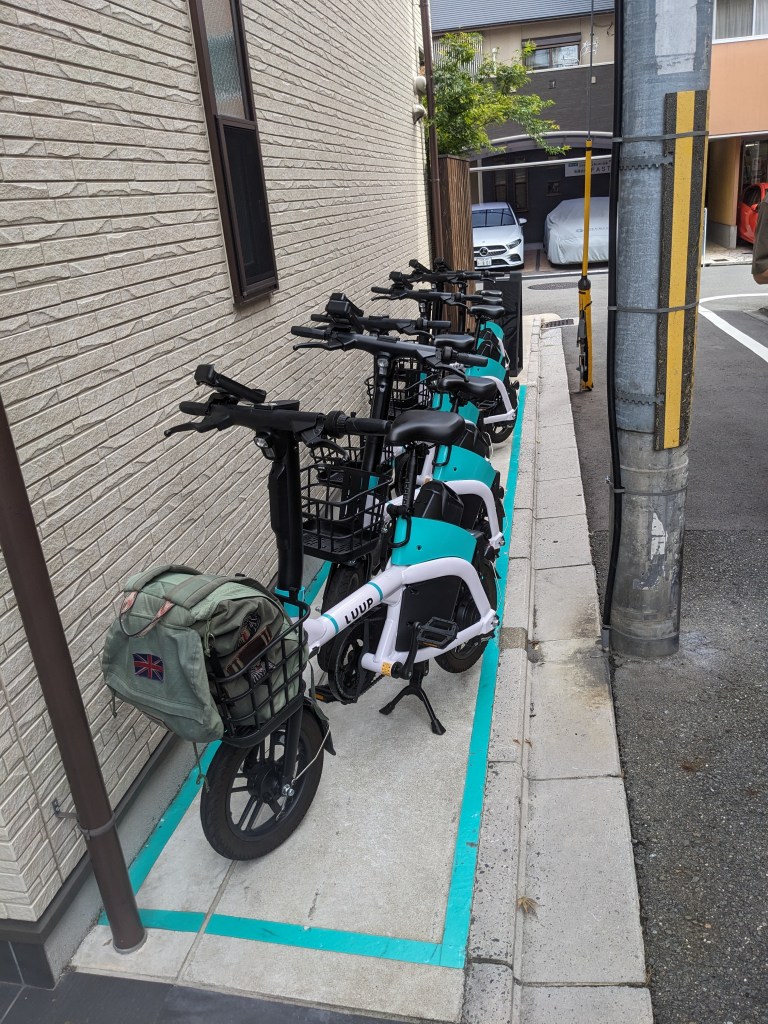
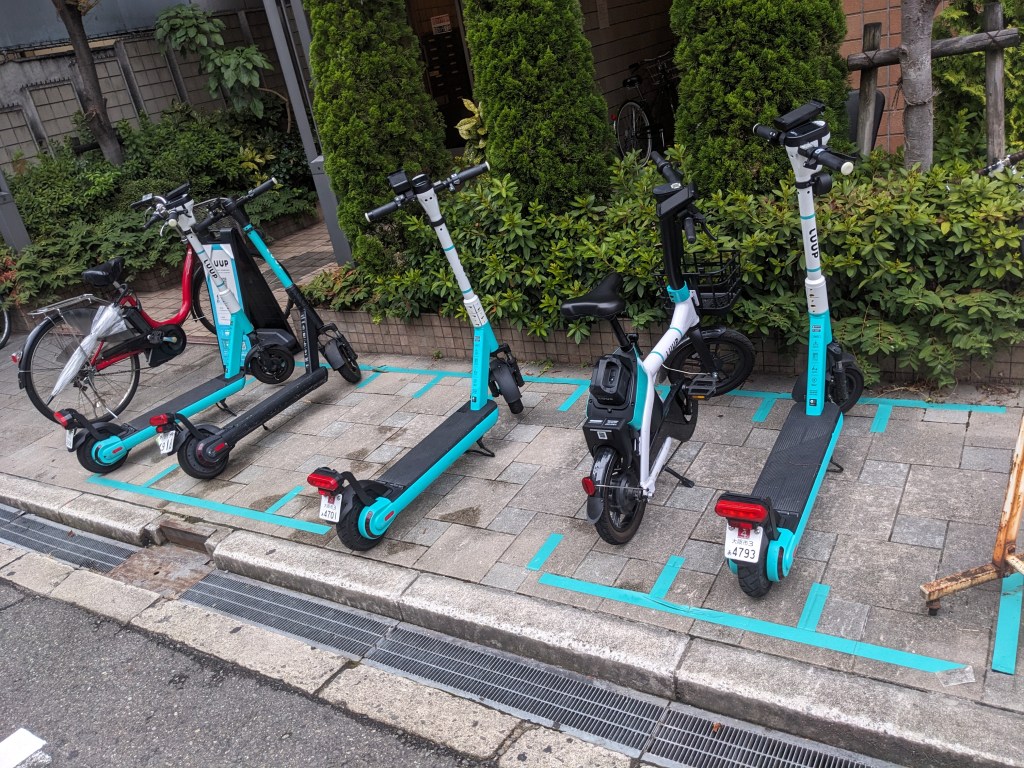
White and luminescent blue livery make LOOP e-scooters and bikes easily identifiable while somehow avoiding the garishness of their Australian cousins. The scooters don’t seem dissimilar, but their electrically enhanced bicycles sport a much smaller form factor with more boxy features making them much cuter, but also extremely manoeuvrable. Most impressive though, is the way LOOP has threaded their vehicles throughout the urban environment. They’ve given them parking bays. We’re talking dedicated, clearly outlined areas, many of which are on private property sort of makes sense for a privately owned business.
They’re also ingeniously managed.
An immediate issue with providing designated parking bays is the changing demand in different locations. For instance, numerous commuters will exit their rides as close to their office as possible creating a high concentration of vehicles in the one spot. For 8 hours, anyone wishing to ascend from walking like a peasant, will have to first have to drag themselves into the city.
LOOP sidesteps this fiasco by incentivising riders to park where the scooters and bicycles are needed most. This is all managed in-app, as riders select their parking spot before they set off on their ride and can navigate straight there. An identical tactic is used to collect the vehicles, offering discounts to start rides in areas that are becoming too saturated with parked vehicles.
This system runs like clockwork. The result is public access to e-mobility that works for everyone wishing to traverse the city- on four wheels, two wheels or no wheels. I can only urge Brisbane not to continue down a path carelessly littered with e-scooters.
If you like to see BCC do something, I’ve started a petition here.
 Reed
Reed 
Leave a comment